

The first month of pregnancy is one of the most delicate phases in a woman’s journey. Even though the baby is just a tiny cluster of cells, important developments begin right from week one—like implantation, formation of the placenta, and early growth of vital organs. This is why the care you take in the first month sets the foundation for a healthy pregnancy ahead.
Below is a complete guide on what to do, what to avoid, and how to take care of yourself in the very first month.
1. Listen to Your Body
During the first month, your body might show early pregnancy signs like fatigue, mood changes, light cramps, and nausea. These changes are normal. Instead of pushing yourself, slow down when needed. Rest whenever your body asks for it—your energy levels will fluctuate often during this period.
2. Start Taking Folic Acid
Folic acid is extremely important in the first month because it helps prevent neural tube defects in the baby. Most doctors recommend 400–600 mcg daily. If you’re planning a pregnancy or have just missed your period, starting folic acid immediately is beneficial.
3. Eat Nutritious, Light, and Balanced Meals
Healthy eating in the first month is important, even if your appetite is low. Focus on:
- Fresh fruits and vegetables
- Whole grains
- Protein sources like eggs, lentils, paneer, fish
- Iron-rich foods (spinach, beans, beetroot)
- Healthy fats (nuts, seeds, desi ghee in moderation)
Avoid skipping meals. Instead, opt for small, frequent plates to avoid nausea and weakness.
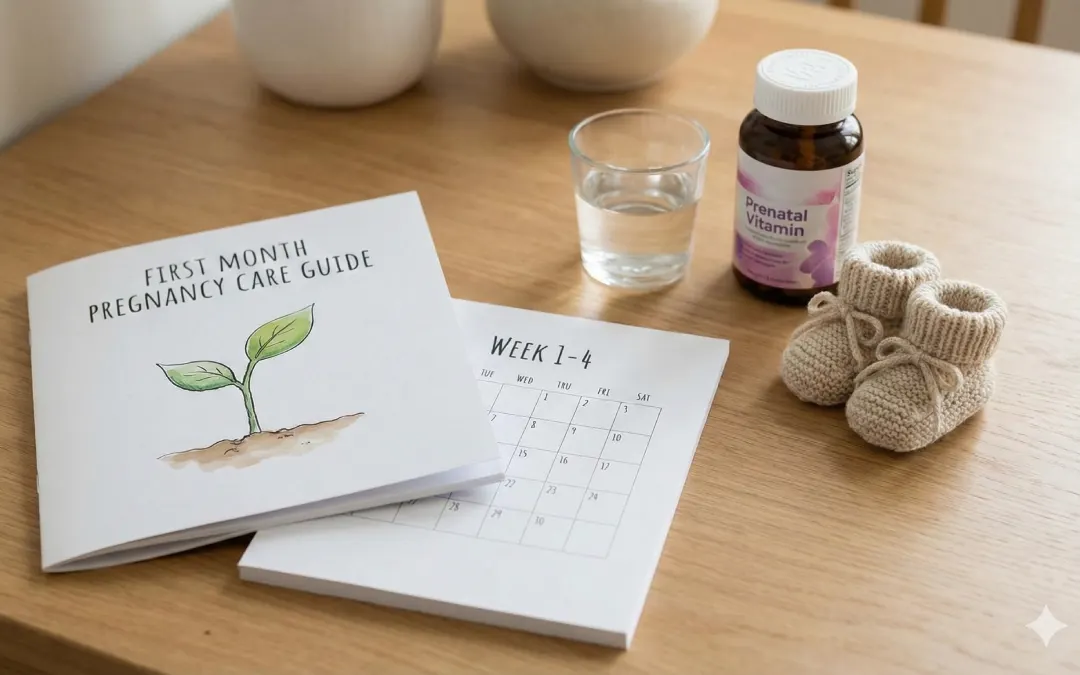
4. Stay Hydrated
Dehydration can cause headaches, dizziness, and tiredness. Drink at least 8–10 glasses of water daily. Coconut water, homemade soups, lemon water, and healthy juices also help maintain hydration and electrolytes.
5. Avoid Harmful Substances
In the first month, even small exposure to harmful substances can affect early development. Strictly avoid:
- Alcohol
- Smoking
- Tobacco in any form
- Drugs without medical approval
Also, limit caffeine intake (preferably not more than one small cup of tea or coffee per day).
6. Don’t Take Medicines Without Doctor’s Approval
Many medicines—including painkillers and antibiotics—are unsafe during pregnancy. Even a common cold tablet should not be taken without consulting your doctor. If you have a medical condition like thyroid, diabetes, or high BP, discuss your medications immediately.
7. Avoid Heavy Lifting and Strenuous Activities
Your body is still adjusting to hormonal changes. Avoid:
- Lifting heavy objects
- Jumping, running, or high-impact exercise
- Long hours of standing
- Intense household chores
Gentle walks and light stretching are fine, but anything that strains your body should be paused.
8. Manage Stress Calmly
- First-month anxiety is normal, especially if it’s your first pregnancy. Try:
- Light breathing exercises
- Listening to calming music
- Meditation
- Spending time with supportive family members
Mental peace plays a huge role in early pregnancy health.
9. Ensure Good Sleep
Aim for 7–9 hours of quality sleep every night. Your body is doing a lot of internal work, so rest becomes even more important. Avoid screens before bedtime and keep your room dark and peaceful.
10. Schedule Your First Doctor Visit
Once your pregnancy test is positive, schedule your first prenatal check-up. The doctor may suggest:
- Blood tests
- Ultrasound after 6–7 weeks
- Early supplements
- Lifestyle guidance
Early prenatal care reduces risk and helps monitor both your health and your baby’s growth.
Precautions to Follow in the First Month
Here’s a quick summary of must-follow precautions:
- Avoid raw or undercooked foods
- Avoid papaya and pineapple in excess
- Avoid exposure to chemicals like cleaning acids, paint, strong perfumes
- Limit long-distance travel
- Avoid hot tubs, saunas, and hot water baths
- Keep your surroundings clean to prevent infections
- Avoid stress and overthinking
Final Thoughts
The first month of pregnancy may feel overwhelming, but with the right care and a balanced lifestyle, you can ensure a strong and healthy beginning for both you and your baby. Small daily habits—like eating right, resting well, avoiding harmful substances, and staying calm—make a huge difference in these initial weeks.