
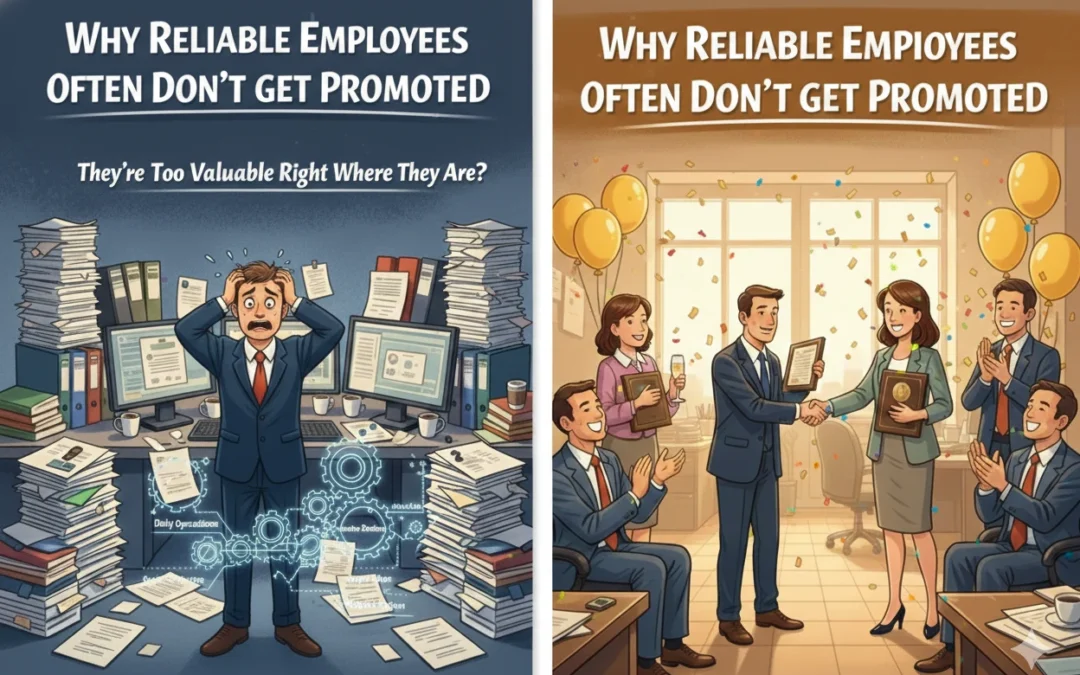
In almost every workplace, there is at least one person who always delivers on time, never complains, supports the team, and keeps things running smoothly. Ironically, these reliable employees are often the ones who get overlooked when promotions are announced. While less consistent colleagues move up, the dependable worker stays in the same role year after year.
This happens not because reliability lacks value—but because it creates a silent dependency.
1. Reliability Makes You “Too Important” to Replace
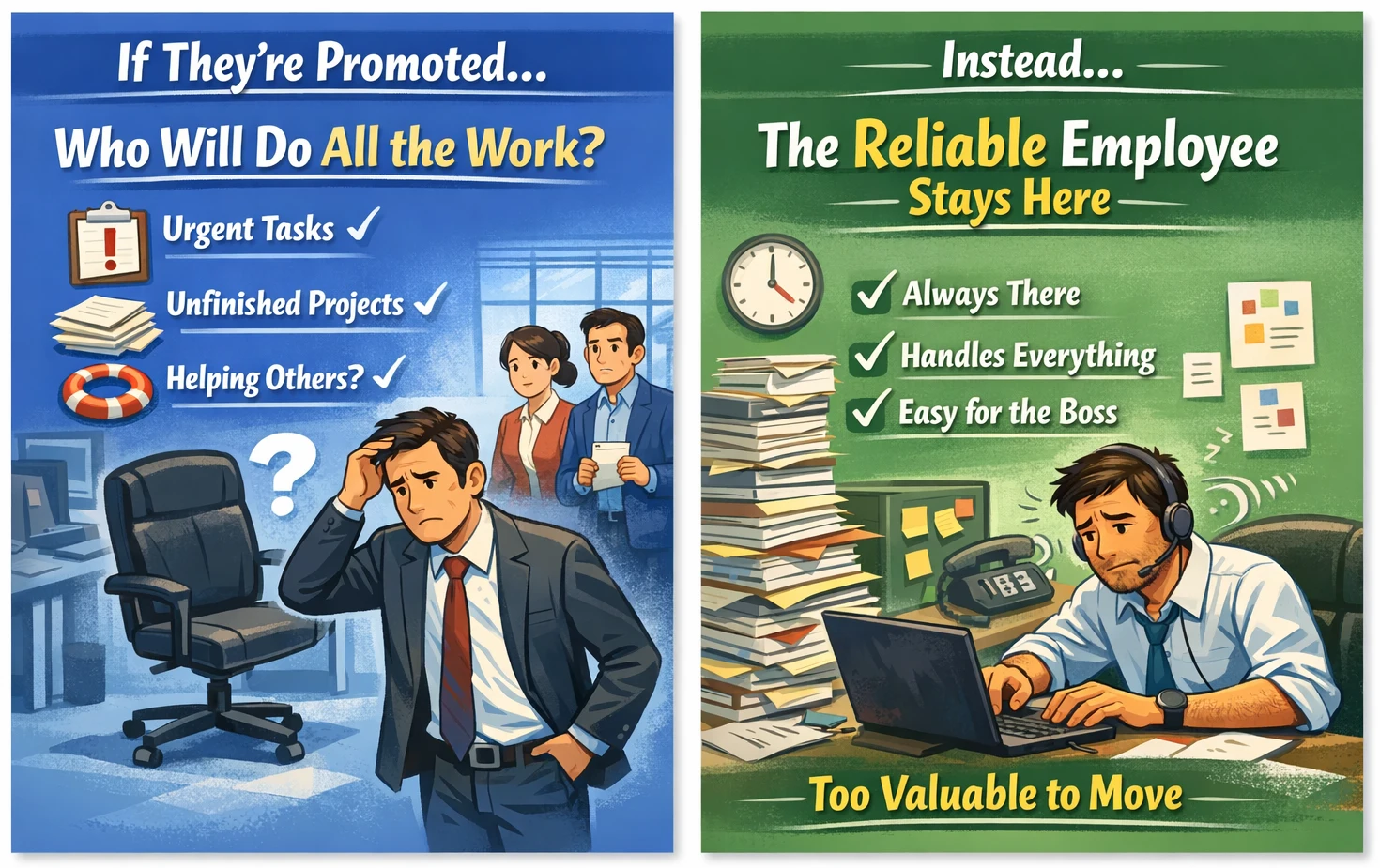
Reliable employees often handle not just their own responsibilities, but also fill gaps left by others. Over time, they become the go-to person for urgent tasks, unfinished work, and unexpected problems.
When promotion discussions happen, managers face a practical concern:
If this person is promoted, who will handle all the remaining work?
Instead of redistributing responsibilities or training others, organizations often choose the easier path—keep the reliable employee exactly where they are. Their efficiency becomes a reason to hold them back rather than move them forward.
2. Promotions Create a Work Vacuum
Promoting a reliable employee does not just mean filling a higher position; it also means replacing the person who quietly keeps multiple operations running. Many organizations are unwilling to deal with the disruption that comes with this change.
So rather than asking who deserves growth, the question becomes:
Who can we not afford to lose from this role right now?
Unfortunately, the answer is often the most dependable employee.
3. Reliability Turns Into a Convenience Trap
Over time, reliability stops being seen as a strength and starts being treated as convenience. Managers rely on the same person repeatedly because it reduces stress and uncertainty for them.
This creates an unfair dynamic where:
- Reliable employees get more work
- Others get more opportunities
- Promotions go to those who are easier to replace
4. Visibility Still Beats Consistency
While reliable employees focus on completing work, others focus on being noticed. Promotions often favor confidence, communication, and visibility over steady performance.
Consistency keeps systems running—but visibility gets recognition.
5. Silence Is Mistaken for Satisfaction
Reliable employees rarely complain or demand growth. Many managers assume this means they are happy where they are. Without direct conversations about promotion, leadership continues assigning more responsibility without offering advancement.
6. The Business Chooses Stability Over Fairness
From a short-term business perspective, keeping a reliable employee in the same role feels safer. Promoting them requires planning, delegation, and training new people—efforts many organizations avoid.
The result?
The company remains stable, but the employee remains stuck.
How Reliable Employees Can Break This Cycle
Reliability should support growth, not replace it. To move forward, reliable employees must:
- Clearly express interest in promotion
- Stop accepting unlimited extra work without recognition
- Ask who will take over responsibilities when they move up
- Build leadership visibility, not just operational value
- Document and communicate their impact
Final Thought
Reliable employees often do not get promoted because organizations fear the gap they will leave behind. The question becomes “Who will do all the work if they move up?” instead of “Who deserves to move up?”
Until reliability is matched with visibility and intention, many hardworking employees will continue carrying the organization forward—without being allowed to grow within it.